
Chattel, Emblements, Trade Fixtures... Oh my
The distinction between real property and personal property sounds simple until you're sitting in an escrow at the closing table and someone asks whether the chandelier stays or goes. That's when the line between what conveys (real and attachments) and what does not (personal and some fixtures) can become an “Issue”.
When agents take a listing agreement there’s usually (at least in California) a moment when the agent will ask the seller, “Does anything stay (convey) with the property or is there any fixture (faucets and chandeliers for example) you’ll be taking with you?”
When agents write purchase agreements (at least in California) there’s an entire section of the agreement where the agents checks boxes about what stays with the property (appliances, smart mirrors, EV charging stations) or if there are any leased items (solar is the big one) that stay with the property. If you don't check the box for the fridge there may be a problem later.
Core Distinction
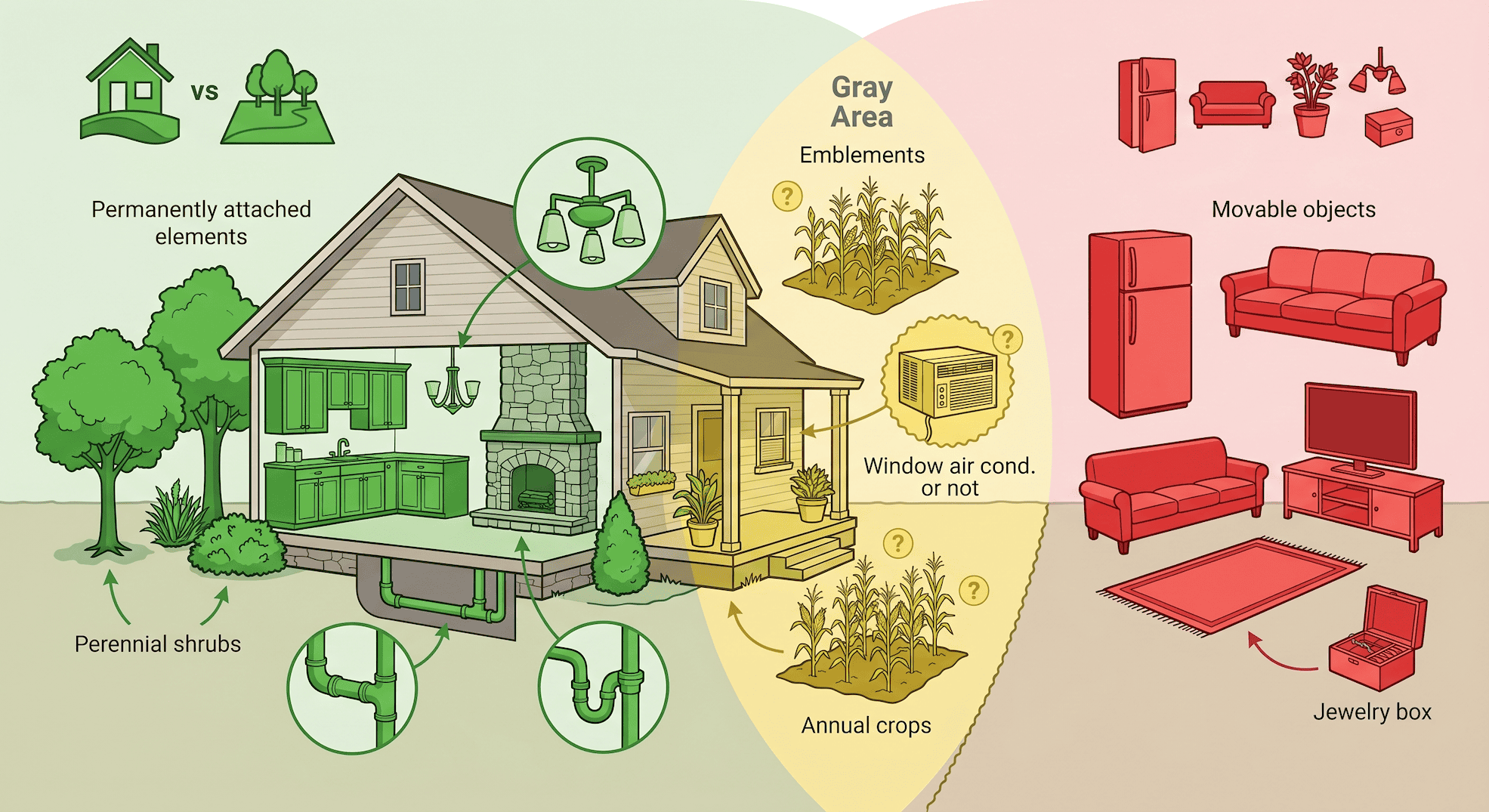
Real property is land and anything permanently attached to it. Personal property is movable. The working definition is straightforward: if you can remove it without changing the land or the structure, it's personal property; if it's built in or fixed in place, it's probably real property.
Real property includes the land itself, the house or building on it, and fixtures like built-in cabinets, fences, driveways, and some integrated appliances. It's transferred by deed and is legally tied to the parcel of land When you buy a house, you're buying real property—the structure and its permanent components pass to you automatically.
Personal property is everything else—furniture, rugs, artwork, cars, clothing, and other movable items. It's usually transferred by bill of sale rather than deed. Your couch comes with you when you move. The appliances your seller leaves behind? That depends on the contract; states like California have forms that specify what stays or what goes with the property.
Fixtures
Fixtures are where things can get a little tricky. Something can start as personal property, but once it's attached in a permanent way, it may become real property. A shed is personal property in the hardware store. Once it's bolted to your foundation, it's real property. A chandelier hanging from a chain? Debatable. A chandelier hardwired into the electrical system? Real property.
This is why home sale contracts spell out what stays and what goes. Sellers often exclude chattels explicitly to avoid disputes. A built-in refrigerator might transfer with the house. A freestanding refrigerator definitely doesn't. The distinction affects not just the sale price but also property taxes and insurance coverage.
Vocabulary: Chattel, Trade Fixtures. Emblements
Understanding chattel is essential for transactions. Chattel is movable personal property—furniture, rugs, vehicles, or appliances not permanently attached to land. The term comes from Old French and appears throughout real estate contracts and legal documents.
Chattel personal refers to tangible, portable goods like jewelry or machinery. Chattel real, conversely, is a leasehold interest in real property—a rental agreement for land or a building, not ownership itself .
Trade fixtures deserve special attention. These are business-specific items a tenant installs and can legally remove without becoming part of the real property. A store owner can remove custom shelving; a restaurant owner can remove a built-in hood system. They're tied to the business, not the building.
Emblements add another layer; they teach us this in real estate school. Emblements are annual crops or plants grown on land that a tenant can harvest and remove, and treated as personal property. A farmer renting land can take the wheat; the landowner keeps the soil.
Advice
When taking a listing (or giving an agent one) or writing a purchase contract make sure to pay attention to what you want to take with you when you leave. My advice to clients is to remove the fixture and replace it prior to bringing the home on the market. If not make sure to disclose that the (whatever) does not convey in the marketing and disclosures.
Buyer’s agents make sure to read the disclosures and check your boxes when writing the offer. The boxes automatically default to “does not convey” if not checked.
Check out my blog for additional Real Estate Post www.americasells.com/blog