
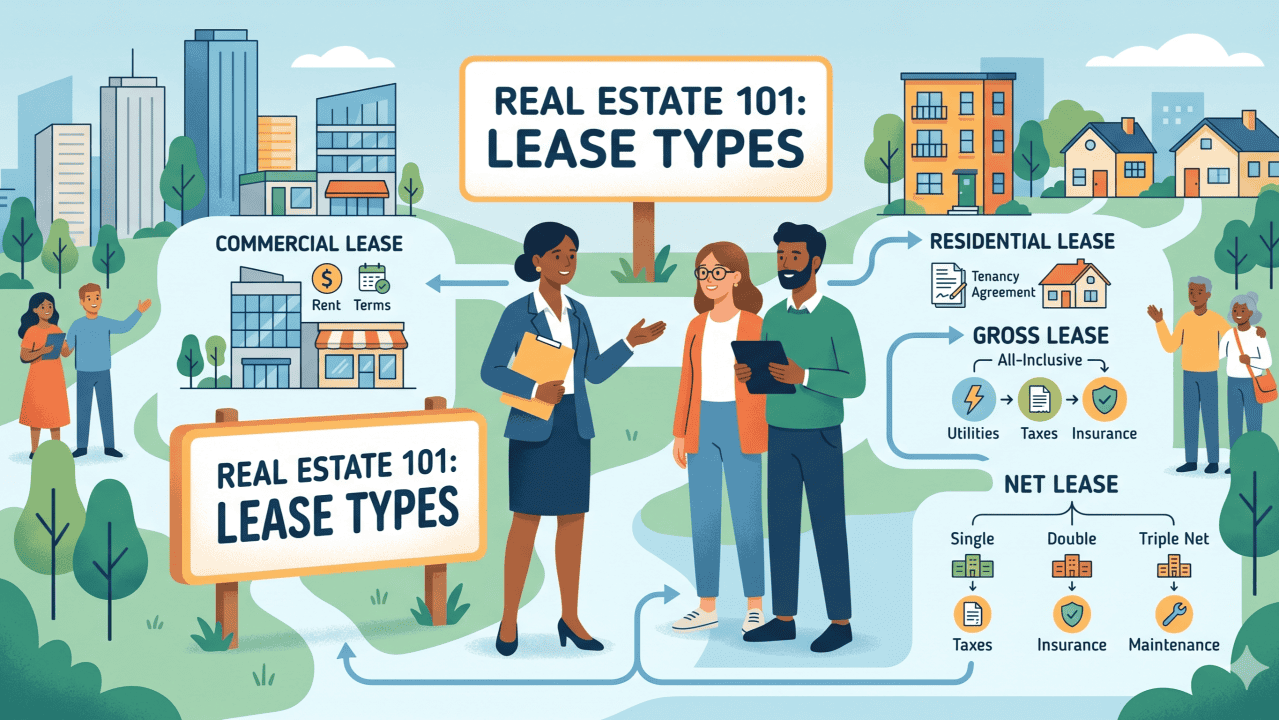
When I first got licensed in 2003 (January 03 instead of September 02 because I failed my real estate license exam the first time) I went to work for a company that specialized in “1031 Exchange Properties, Credit Tenant, Bond and Net Leased Investments in the Western Five.” Over the years I have analyzed, written, and negotiated a lot of different type and kinds of leases, and I still have to stop and think about the different types from time to time
.Gross means tenant pays rent and landlord covers the costs. Net means expenses get shifted to the tenant.
That is the simplest way to remember it, and the reason lease type matters more than most people realize. The rent number is only the headline. The real story is who pays the operating expenses, carries the risk, and ends up paying the taxes, insurance, and maintenance costs.
Most people hear lease and think it means one thing. It does not. A lease is a contract, and the way costs are split can completely change the economics of the deal. That is true whether you are a landlord, tenant, broker, investor, or me trying to remember what a modified gross lease is and how it differs from a net lease.
Lease Types
Lease types are about one simple question. Who pays for what, and who carries the risk. Some leases bundle most expenses into the rent. Others split costs between landlord and tenant. Others shift almost everything to the tenant. The structure changes the deal even when the rent number looks simple on paper.
There are also leases tied to specific uses or rights. Some cover farmland. Some cover cell sites. Some are based on sales revenue. Some involve land only rather than the building on it. The label tells you the category. The lease itself tells you how the deal works.
A gross lease bundles most expenses into the rent, which is the version most people know from renting an apartment. The tenant pays a fixed rent, and the landlord pays the operating expenses. That usually includes property taxes, insurance, and maintenance, although the exact terms depend on the lease.
A gross lease is common in office and some retail settings, and it gives the tenant predictability. The landlord, meanwhile, takes the risk that expenses rise faster than rent.If you have ever paid rent for an apartment, which is usually a gross lease. Gross lease tenants usually pay gas and electricity for their units, but the building expenses are generally baked into the rent.
A net lease shifts some or all of the operating costs to the tenant.
A single net lease, often called N, is where the tenant pays rent plus one major expense, usually property taxes. A double net lease, or NN, adds insurance and taxes. A triple net lease, or NNN, pushes taxes, insurance, and maintenance onto the tenant.
That is why triple net is so popular with investors. The rent may look lower, but the tenant is paying the building’s bills too.
Lease type affects valuation, financing, and negotiations. Two properties can have the same rent roll and wildly different economics depending on who pays the operating expenses. A gross lease may produce more work for the landlord but a cleaner experience for the tenant. A triple net lease may look less expensive to the tenant, but the true cost can be higher once all the pass-through expenses are added.
That is why investors care so much about the actual lease language. A cap rate is only useful if the income and expenses are real. If you underwrite a net lease like it is gross, or a gross lease like it is net, your numbers are fiction.
For tenants, the trap is assuming rent equals total cost. It does not. A modest base rent can become expensive once annual operating escalations, common area maintenance, taxes, and insurance are added.
That is why reviewing the lease should never be a formality. Read the expense section. Read the escalation clause. Read the renewal terms. And read the definitions, because commercial lease language likes to hide money in plain sight.
For landlords, the trap is the opposite. A gross lease can feel simple until insurance spikes, a roof fails, or a tax assessment changes. Then the landlord discovers they were not earning passive income. They were running a risk management business.
A modified gross lease is the hybrid.
The tenant and landlord split selected expenses. The tenant might pay base rent plus utilities. The tenant might pay base rent plus janitorial. Or the lease might shift increases after a base year to the tenant while the landlord covers the rest.
This is one of the most common commercial lease structures, and it is also one of the easiest places to get surprised if you do not read the expense section carefully.
The most important question in a modified gross lease is the base year. If the lease says the tenant pays increases over the base year, you need to know exactly what year is being used and what expenses are included in that calculation.
Other common lease types
A percentage lease is different. The tenant pays a base rent plus a percentage of sales revenue above a certain threshold.
That model is common in retail, especially when the landlord wants a share of a successful tenant’s upside. The landlord takes some risk on the front end, but if the store performs well, the landlord participates in the growth.
A ground lease is where the landlord leases land, not necessarily the building on it.
The tenant usually owns or develops improvements on the land while paying rent for the ground beneath them. These leases are often long term and can be very valuable because they separate land ownership from building ownership. Ground leases are common for pads, cellular sites, restaurants, and certain commercial developments.
There are also leases tied to specific uses or rights. Agricultural leases deal with farmland use and production responsibilities. Telecom leases cover the right to install and operate communications equipment on a property, cell towers being the most common example.
And not every right comes with the surface. Gas rights, mineral rights, and air rights can be owned or leased separately from the land itself, depending on the deal and the law governing it. The label on a lease tells you what kind of arrangement it is. The language inside tells you who really pays for what.
The Bottom Line
A lease is not just a number on a page. It is a way of distributing risk and knowing the difference can make or break a both a landlord and a tenant.
Gross leases favor tenants who want predictability. Modified gross leases split the pain and the predictability. Net leases favor landlords who want expense pass through. Percentage leases let landlords take part in tenant sales. Ground leases separate land value from building value and often create long term control and long-term complexity.
This article and many more are available on my blog. www.americasells.com/blog