
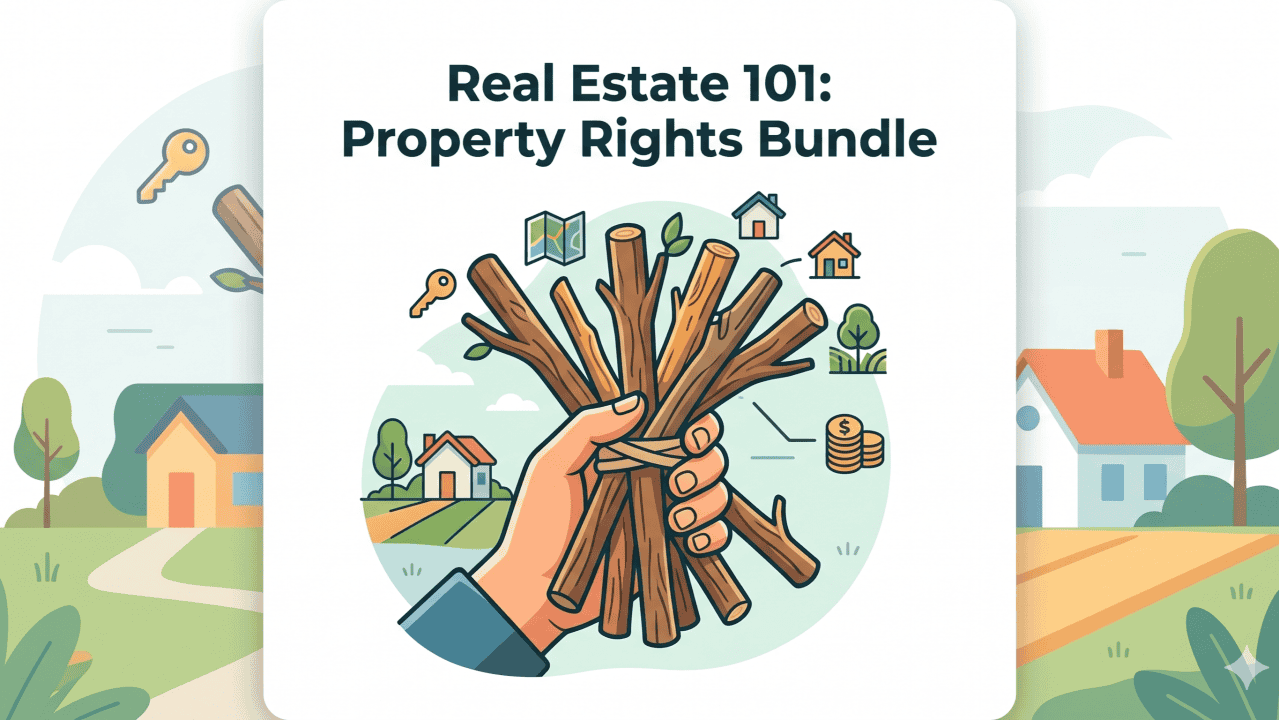
Most people think buying a house means you own it outright. You don't. You own a bundle of rights—a collection of legal privileges that define what you can and can't do with the property. Understanding this distinction changes how you negotiate, finance, and manage real estate.
The Bundle of Rights (Sticks in this Analogy)
The "bundle of rights" is often visualized as a bundle of sticks. Each stick represents one legal right. When you own property, you typically hold all the sticks. But when you finance it, lease it, or allow easements, you're handing some sticks (or portion thereof) to someone else. Understanding which sticks you keep and which you give away is key to understanding what you own.
This structure exists because property ownership can be fluid; It's divisible. You can own the land but lease the improvements. You can own the building but grant someone an easement for utilities. You can own the house but allow a conservation easement that restricts development. Each of these arrangements represents a division of the bundle.
Five Core Rights
Right of Possession gives you the legal right to occupy and hold title to the property. You can live there. You can exclude tenants and trespassers. But if you have a mortgage, your lender has a lien on the property; they hold a partial stick in your bundle until the loan is paid off.
Right of Control is your ability to alter, manage, or use the property within lawful limits. You can remodel your kitchen, paint the walls, or landscape the yard—but you have to follow local building codes, HOA rules, and zoning restrictions. These restrictions are part of owning property in an HOA or certain areas; the City of Santa Barbara has strict design guidelines. Your right of control exists within boundaries set by law.
Right of Exclusion is the power to keep others out. You can put up a fence, post "No Trespassing" signs, or deny entry to anyone you choose (with narrow exceptions for government actors with warrants or easement holders with legal rights). This stick is often the most emotionally satisfying and it's what makes a property feel like yours.
Right of Enjoyment covers your ability to use the property for any legal purpose—living there, operating a home business, renting it out, or simply enjoying the quiet privacy of your own land. This right is broad until restricted by deed, law, or contract.
Right of Disposition is arguably the most valuable stick. It's your ability to transfer ownership permanently or temporarily and selling the home, giving it away, leasing it, or mortgaging it. Without this right, you'd be stuck with the property forever. Restrictions on disposition are serious legal limitations.
Bundle Gets Divided
All the sticks in your property bundle might not be complete. Read here: Your rights are subject to change.
When you mortgage a property, your lender gets a lien. They don't own the property, but they have a legal claim against it. You retain possession, control, exclusion, and enjoyment—but disposition is constrained. You can't sell without paying off the lien. The stick of disposition is partially held by your lender until the loan is satisfied.
When you grant an easement—say, for a utility company to run power lines across your land—you're handing over the right of exclusion for that specific area. The utility company can access your property whether you like it or not. Your bundle is intact except for that one stick .
Conservation easements permanently restrict development on land in exchange for tax benefits; California has the Williamson Act. You keep possession, control, and enjoyment—but disposition is constrained. You can't sell the property for development. You've voluntarily handed over a stick to preserve the land's natural character and sometimes lock in a financial benefit.
Leasing your property divides the bundle between you and your tenant. They get temporary possession and enjoyment. You keep control (within limits), exclusion (after the lease ends), and disposition (you can still sell, though the buyer takes the property subject to the lease).
Why This Matters
Understanding the bundle of rights changes how you evaluate a property. A house with a mortgage isn't fully owned; it's partially owned by the lender. A property subject to easements has restrictions on control and exclusion. A property in a conservation easement has limited disposition rights. These aren't minor details—they affect value, financing, and future use.
When you're buying, investigate what sticks are missing or restricted. When you're selling, disclose what sticks you're handing over. When you're financing, understand exactly which rights your lender is claiming. The bundle of rights framework isn't just legal theory.
This article and many more are available on my website: www.americasells.com\blog