ORIGINALLY PUBLISHED FOR REALTYTIMES.COM FEBRUARY 2026
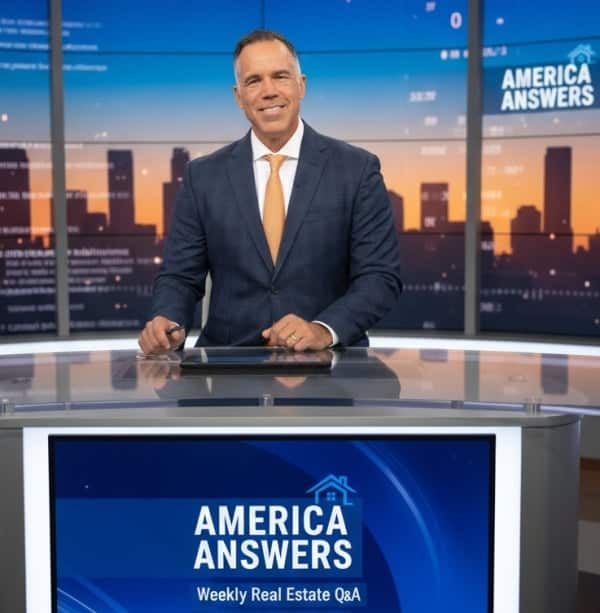
America Answers: No Agent Left Behind
"That's a NO!!"
Every week at brokerages, agents—both new and experienced—ask questions that get answered in varying degrees of correctness. The questioners usually grab on to this answer and charge directly back into battle.
This is what, in the industry, we call, "That's a NO!"
People like being asked questions and giving answers; that's the entire premise of the column. I like it when people ask me questions and want to hear what I have to say. I feel useful and helpful and strive to provide correct information in an authentic way—which for me doesn't always mean wrapping it in trauma speak—and as unbiased as possible.
You will never leave my office feeling dumb for the question you asked me, but my delivery is more cilantro than pizza; not for everyone; I do have an opinion.
And I have one about “that agent”. They have a couple of years under their belt and love to “respond all” when people in the office have questions.
They confidently provide glib and condescending answers, possibly based in experience but probably AI generated, which immediately answer questions any agent in the office has on any topic, “My god Martha, its section 17 of purchase contract…duh”.
My grandmother used to say, famously once dismounting from a horse, that her sister answered questions so fast, “the thought of her exhausts me.” Don’t be “that agent”.
My sales manager from the long long ago used to have a sign on the outside of his cubicle which read:
"When you are dead, you don't know you're dead, it's hard for other people.
It's the same when you are stupid."
The point of this is simple when “that agent” confidently give bad answers, you don't feel the damage. Your client does. The title company does. The lender does. The escrow officer definitely does. Other agents do and that is a, “That’s a NO!”
You're the only one in the room who doesn't know you've just made closing significantly harder. That's why asking questions—even dumb ones—matters more than confidently taking, or giving, bad advice. Don’t be “that agent”.
Q: This is my very first transaction and one of my buyers, is going out of the country and can't sign the closing documents. What are my options? Please Help.
A: You have options, but let's be clear about what actually works and what creates problems you don't need.
Your first move is calling your escrow officer immediately. This is not a unique situation—title companies handle overseas closings all the time, and they have systems in place.
The escrow officer will tell you exactly what your lender will accept, what your title company can facilitate, and what timeline you're working with. I know you already figured this out—congrats—make sure to talk to the title company before you talk to your client because any complication stresses buyers out; be the solution provider if possible.
The cleanest option is a single-property limited power of attorney drafted by your title company. Your client signs the POA in front of a notary before they leave the country, authorizing another trusted person to sign the closing documents on their behalf. The lender usually accepts this because it's a documented, limited grant of authority—not a blanket delegation. Your title company handles the mechanics.
If your clients are already overseas, getting a US Embassy or Consulate to coordinate signing is affordable but logistically complex. Consular seal fees run $50 per signature. Add travel to the embassy and international express shipping, and costs climb.
The real bottleneck is appointment availability: wait times range from two weeks to several months, with 3–6 weeks typical turnaround. Embassies don't provide signing agent services, so if your client misses an initial, the lender may reject the entire packet. Use this option only if your lender prohibits POAs or your client is already abroad. For nearly all residential cases, a power of attorney signed before departure is the superior move.
Bottom line: call your escrow officer today, ask about the limited POA, and let them guide the process. They've done this before.
Q: What should I say to make my clients trust me a lot?
A: Shift the question. Ask yourself what you should do, not what you should say. Because the foundation of trust is built on actions not words.
It’s easy for clients to trust someone who does what they say they’ll do. Showing up on time. Return calls within an hour. Send documents before they ask. Deliver bad news fast, not after the deadline passes. Say, “No” if you can’t do something.
Your client doesn’t need a speech. They need proof. Proof you’re organized. Proof you’re watching deadlines. Proof you’re protecting their interests when they’re not in the room. The agent who texts, “Just checked your loan status—underwriting is delayed, here’s why and what we’re doing” earns more trust than the one who says, “I’ve got this” and ghosts for three days.
Most agents talk about being responsive. The ones who earn trust are responsive. They don’t promise excellence. They demonstrate it in small, consistent ways—escrow instructions sent same-day, repairs negotiated fairly, inspection deadlines flagged in red.
Clients trust agents who act like they care, not just say they do. You don’t need to tell them you’re reliable. You need to be reliable. Everything else follows.
Q: What do homeowners worry about the most when selling their house?
A: Money. That's it. Everything else flows from that one anxiety—timing, repairs, staging, negotiations—it all comes back to the one question that keeps sellers up at night. How much will I actually get?
Here's what homeowners don't say out loud but absolutely think. "Is this agent capable enough to get me that money?"
And this is what you need to answer before you even knock on the door with your listing presentation. "How can I show this client that I'm competent?"
Because honestly, most agents can't prove it until the check clears. You can talk about market conditions and pricing strategy all day, but what sellers really want to know is whether you've actually done this before and whether you won. Not theoretically. Actually.
Your job is to give them proof. And you can do it whether you've listed a property before or not. Show comparable sales in their neighborhood. Walk them through what happened in similar situations. Be honest about what's working in the market and what isn't. Don't oversell the property or the process—just be clear about what they can realistically expect and how you're going to get them there.
Selling a home requires strategy, communication, and sometimes hard conversations about what's not working. Most agents skip the hard part and hope the market carries them. Don't be that agent. When sellers believe you know what you're doing, the anxiety eases and the partnership becomes real. That's when you stop competing on price and start competing on competence. That's when you win.